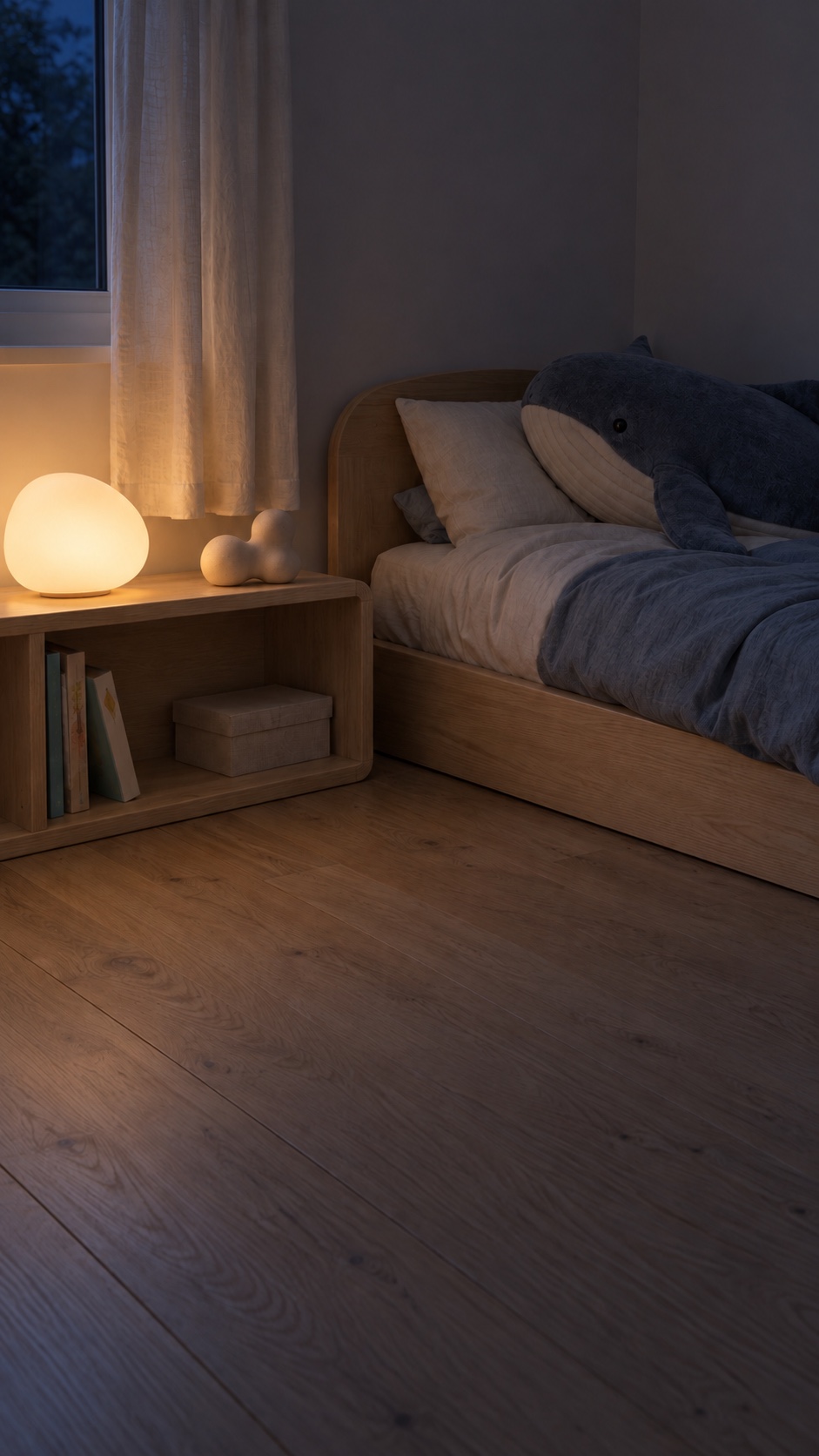
Milo Plush
A room friend for daytime play and bedtime return.
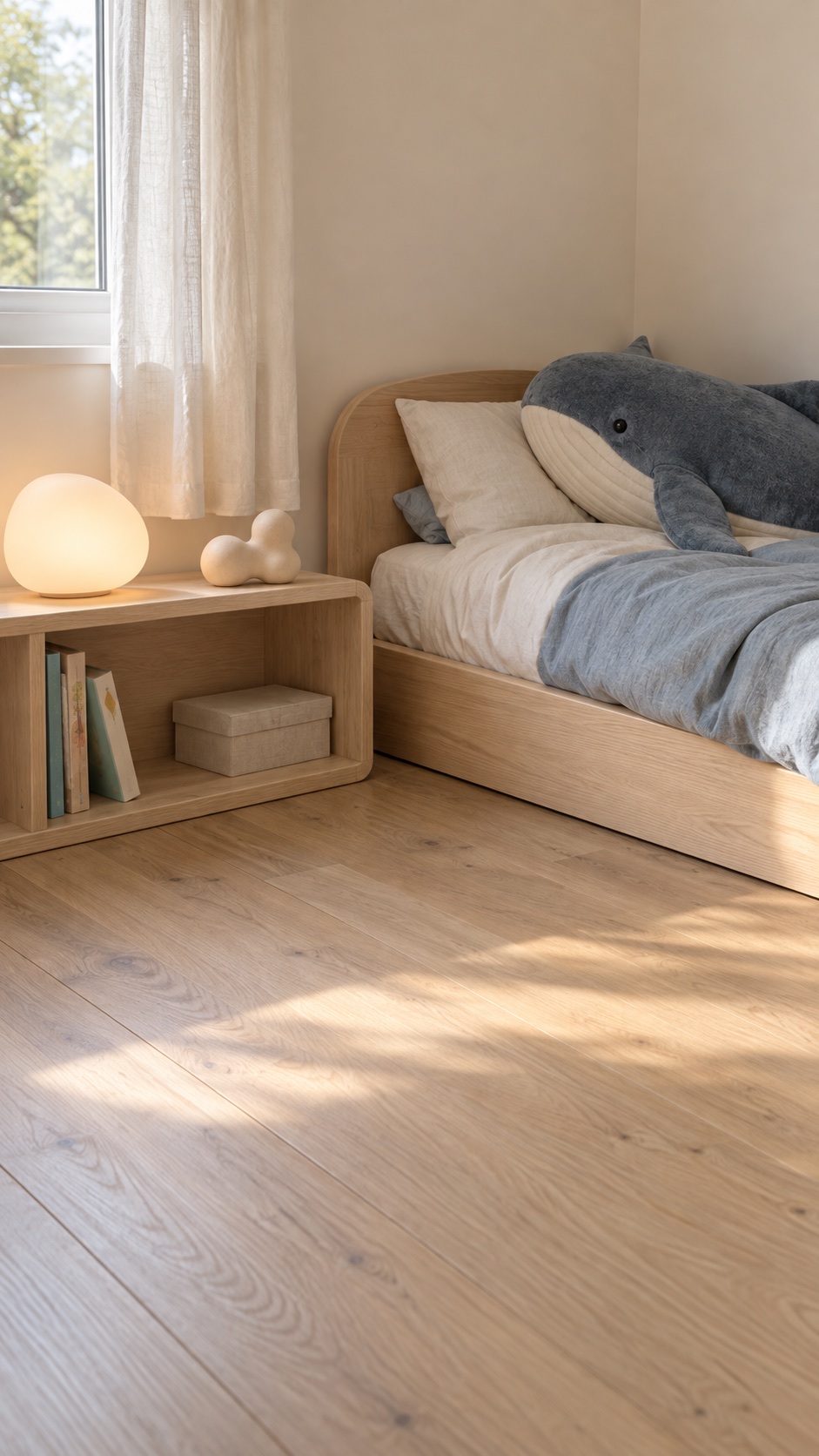
Own-room night setup
One low light. One sound choice. One familiar daytime object or room friend. The room stays ordinary; the digital world quietly brings those familiar things to life.
Three familiar objects
A room friend for daytime play and bedtime return.
A low, soft bedside light for the first night.
One small daytime object the room can respond around.
A room that notices
One small fish appears near a familiar object, then pauses.
Milo chooses whether to approach after the room has already begun to feel alive.
At night, the movement leaves and Milo returns to the plush.
Milo goes home
In Rest, the fish hide and digital Milo crosses toward the familiar plush. The final scene is simply the child's room again.
Build this in a real room
A room, a light, a familiar object, and a room friend are enough. Furniture stays neutral and belongs to the family—not to a product bundle.
No cameraThe room responds to touch and timing, not child tracking.
No recordingParticipation never requires a child's image, voice, or name.
Gentle motionNo strobe, rapid flashing, or startle entrance.
Child-reachableThe light, room friend, and daytime object stay low and familiar.
Method and privacy
We use structured checkpoints across the first two weeks. Room Gravity is an internal measure of voluntary return, not a promise about sleep outcomes. Anonymous pilot observations remain separate from publication consent.